

Children on the Edge
 
Picture
After raising £7,000 last year for our work, the girls at St Christopher’s Prep School in Hampstead decided that they would like to run another fund raising activity in 2013.

The girls of Bronte house, decided that an Alice themed tea party would be just ideal, and with the addition of a second hand clothes exchange into the mix, it was the perfect recipe for what Head teacher Suzie West described as “a hectic, entertaining and profitable afternoon”. 


All the girls dressed up as a character from Alice in Wonderland, ate cakes, drank lemonade and enjoyed a screening of the film, whilst parents chatted and enjoyed a cake or two themselves!

Whether or not these girls believe in ‘six impossible things before breakfast’ we’re not sure, but they did raise an incredible £2,000 for our projects in one afternoon, which is a nigh impossible feat and one to be very proud of. 

We’d like to say a huge thank you to them and the staff and parents at St Christopher’s. Just one mad tea party has raised enough to provide lunch and breakfast for 80 children in the slums of Uganda for an entire year! On top of this, the money raised can also pay for a years worth weekly visits from a trained social worker and two community healthcare workshops.

If you think your school could raise money for our work, then please get in touch


Picture
Children on the Edge Ambassador, Euan Clarke poses the riddle, 'Why is a raven like a writing desk?' while Headmistress Susie West puzzles over the answer!
 
 
Picture
We last reported about how children from the slums of Soweto, a community of displaced people on the outskirts of Jinja, Uganda now have their own safe place to go to, where they can play, learn and eat. Since then our Grants Officer, Ashley Kuchanny and our director, Rachel Bentley have both been out to the project to monitor the progress that the Centre is making possible for these children. 


Even though it’s still early days they have both witnessed striking changes and encouraging evidence that the community is starting to turn around.

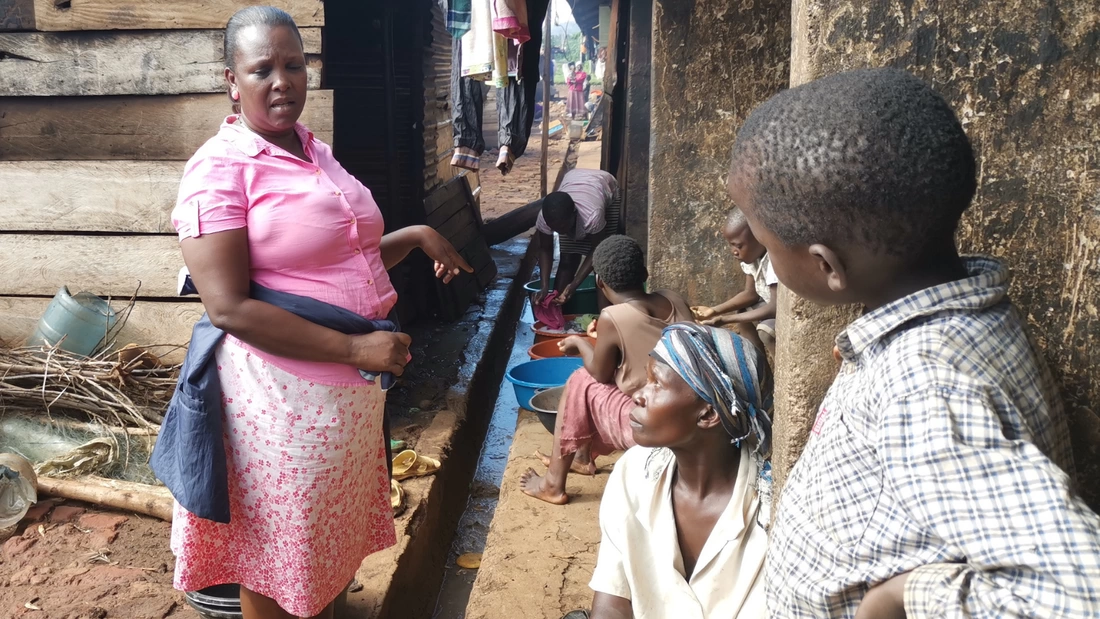
“As you walk around Soweto there is still black, toxic sludge from the breweries every 15-20 metres” says Ashley. “The smoke is acrid, the sludge pits have no fences and many children still scour the rubbish dump for slivers of charcoal, but the blackness of the area is starting to lift. There is less rubbish, it’s cleaner and the Centre is now a safe hub for the children of the community”.

It was found that as many as 40 children at the Centre (a third of those who attend), didn’t even know their own names. This is a result of many parents dying of AIDS in the area, leaving children in the care of elderly grandparents, some of whom are looking after up to 10 children at a time. Within the chaos of such a big family, without adequate care, a child’s identity can be lost. One of the first things we did at the centre was to find out the children’s names, and help them to learn them. It’s a small task, with huge implications for each child’s self worth and identity.

On her trip Ashley did a social mapping exercise with our local partners and beneficiaries, not using pens and paper but local materials like bottle tops, flowers and ash. Here they identified areas where they felt frightened and in danger, as well as areas they felt safe. Whilst our child centre was shown to be a place of safety, both the children and the parents identified the railway line as a prime site for abductions and abuse.

The study went on to reveal a number of film halls throughout the area where children are lured in and abused. Disturbingly one of these places was found to be directly opposite the child centre itself. By the time Rachel visited 2 months later, staff from the project had successfully got this film hall closed down.

Rachel’s visit last month also revealed some incredible progress for the children. “The children are looking well nourished and healthy, they are enjoying creative and colourful activities rather than learning by rote on benches” says Rachel. “Not only this,  but the child protection committee have worked in safe principles for visitors and have fast become the ‘go-to’ group for child protection advice throughout Soweto”.

Watch this space for further encouraging stories from Soweto, find out more about our work here and consider donating to the project.


Picture
Children from the slums of Soweto, a community of displaced people on the outskirts of Jinja, Uganda now have their own safe place to go to, somewhere they can play, learn and eat. 

This is no small thing in a community where abuse is rife, brewing alcohol is the main industry and where child sacrifice is prevalent. 

Due to AIDS claiming their parents many children live in cramped households cared for by elderly grandparents or older siblings. 

139 children attend pre-school at the centre. These children are from the most vulnerable households in the community. Malnutrition is a serious problem and many children are lucky if they get a meal a day. Young children are often fed the dregs of the alcohol brewing. As part of the early childhood development programme these children now receive morning  porridge and for lunch posho (maize stodge) and beans or greens.The staff cook this in a small wooden hut with two pots over open fires. 

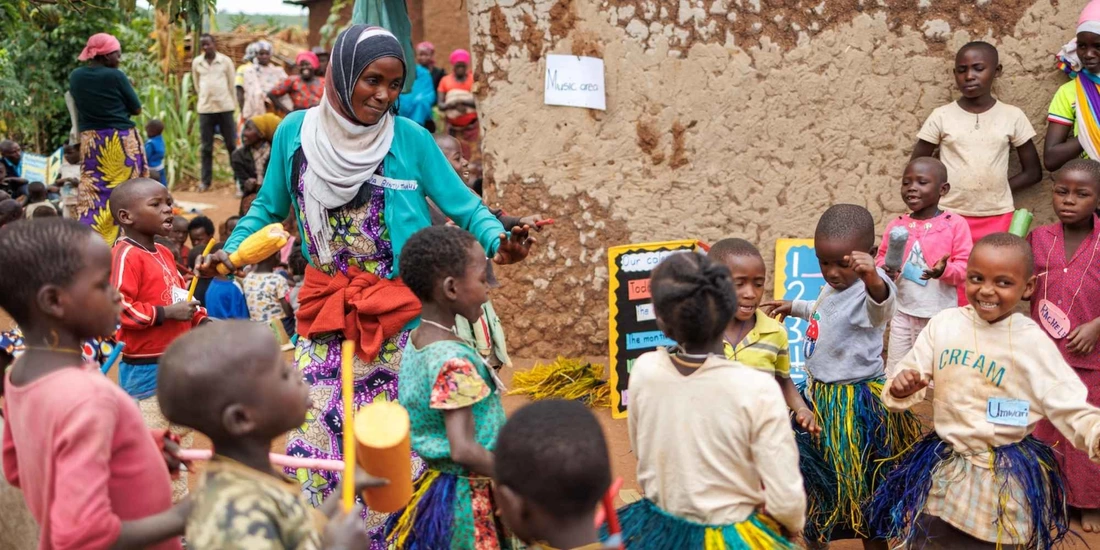
Education and play sessions run throughout the day with a creative pre-school programme in the morning and afternoon sessions of play and education for the older children. 

The community are taking ownership in the planning of the children’s activities, coming up with creative ideas of working within a limited budget. They are sourcing materials locally such as building blocks from local wood, beans for counting lessons, coconut fibre balls and percussive shakers from plastic bottles filled with millet. For the outside they will be building a sandpit from tyres and filling it with sand from the River Nile.

The project’s Child Protection Committee formed from within the local community has already prevented repeat cases of abuse through effective intervention. This committee is running awareness sessions on different topics for the adults of the community ranging from child development and child protection to domestic violence and alcohol awareness.

An important component of the programme is a livelihood scheme to provide alternatives to brewing alcohol enabling carers to earn income to feed their children and send them to school. One of these alternatives is developing kitchen gardens which has been made possible by a generous donation of land to the project from the local diocese. This land will also be used to grow food for the pre-school programme.

James aged 5 is one of the lucky children who attends the Centre. He is being looked after by his aunty as his mother died of AIDS. His aunty distills alcohol to earn a living and finds it very difficult to put food on the table every day. She is HIV+. James has not been tested   but 2 of his siblings died with signs of AIDS. As part of the projects health screening programme James will soon be tested and will receive any necessary medical support. His aunt says he loves attending the centre and comes home every day singing songs.

Please donate and help more children like James or find out more about our work in Uganda.


Picture
Soweto slum, on the outskirts of Jinja, Uganda is home to 4,000 displaced people. Here, HIV prevalence is high, child headed and grandmother headed households are common and malnutrition is a chronic problem. There are no health or education services and the main industry is alcohol brewing which stifles the community.

Last year Rachel Bentley, our director at Children on the Edge,  made a connection with an organisation called ADSN (Adolescent Development Support Network) who do fantastic work with street teenagers many of them originating from the slums. These slums are home to 85% of the city’s population and found on the periphery of Jinja. ADSN want to develop a preventative programme to target younger children living in the slums to give them the necessary support and skills they need to avoid ending up on the streets. They have asked Children on the Edge to help with this.

The problems in Northern Uganda have become well known and in the past few years the media and aid agencies have flocked to the area. What is less well known is the sheer volume of people displaced internally by the conflict and troubles of the North. Not only are these people facing displacement, but the AIDS pandemic has created a huge number of orphaned children, child headed households and elderly headed households.

Soweto is one of 8 peri-urban townships surrounding Jinja and identified by ADSN as the neediest slum. It’s 4,000 inhabitants are all cramped within 10 acres. The majority have been displaced from Northern Uganda with additional numbers having fled from Rwanda and Sudan. Conditions in the slum are appalling. There are no health centres or schools, houses are built from mud and people eat once a day if they are lucky.

Often unattended and with no place to go throughout the day children are exposed to a number of vulnerabilities, including child sacrifice. Brewing and distilling alcohol is Soweto’s primary economic activity. Many small children are given the dregs of the brew and the toxins from the shack breweries run through the streets where they play. Child abuse is common with continual exposure to inebriated men and prostitution leaves children vulnerable to abuse and HIV.

Children in Soweto have little hope,  there are no sustainable livelihoods open to them or their families and malnutrition is rife. There is heavy dependence on witchcraft as people use it in a desperate bid to escape poverty. Consequently child sacrifice is a growing issue, especially for these children left without care.

In partnership with ADSN, Children on the Edge aim to establish a child friendly  space in the community providing essential services for these children. This will be a safe place to receive help and protection and will give them a chance to simply play and be children. An important component to this project will be an agricultural programme to provide an alternative to the alcohol industry that reaps such destruction.

Please help us make a difference to these children who really are ‘on the edge’. Watch this space to see what develops and if you think you can help with raising or donating money then please do get in touch